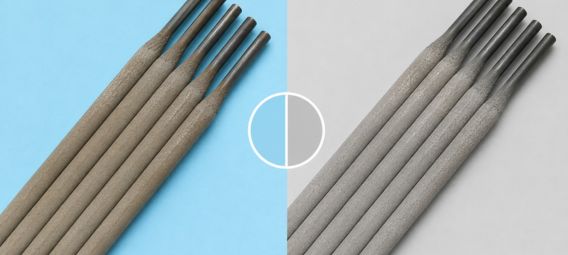
Cobalt-based hardfacing electrodes are used in industries where parts are exposed to wear, corrosion, and heat for a long time. ECOCR-C and ECOCR-B are two of the most widely used grades in this family. They have the same cobalt-chromium base, but their performance is different depending on the application. The wrong selection leads to longer maintenance intervals and a shorter component life, so it is important to choose the right grade.
What Are ECOCR-C Welding Electrodes?
ECOCR-C electrodes are cobalt-based hardfacing electrodes, made from cobalt, chromium and tungsten with a relatively low carbon content. The lower carbon level gives the deposit better ductility and higher corrosion resistance. The Features of ECOCR-C COBALT Welding Electrodes are excellent corrosion resistance, good thermal stability, and reliable wear protection in high-temperature service conditions. These make them ideal for petrochemical, power generation, oil and gas, and aerospace applications. Typical applications are valve seats, pump components, and turbine blades.
What Are ECOCR-B Welding Electrodes?
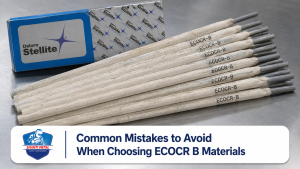
ECOCR-B electrodes have higher carbon and tungsten content than ECOCR-C. This results in the formation of more hard carbide phases in the weld deposit, hence increasing the hardness and abrasion resistance. These electrodes are used in cement making, mining, steel processing and earthmoving. Typical applications are cutting edges, wear plates, crusher liners and agricultural tools.
ECOCR-C vs. ECOCR-B Welding Electrodes: Major Differences
Both are cobalt-based alloy electrodes. The differences in composition lead to noticeably different performance in the field.
Chemical Composition
ECOCR-C has a carbon content of around 0.25%. ECOCR-B ranges from 1.2 to 1.7% carbon and also carries higher tungsten levels, which is what drives the harder carbide formation. The leaner composition of ECOCR-C results in better ductility and corrosion resistance.
Hardness and Wear Resistance
ECOCR-B reaches approximately 40 to 50 HRC. ECOCR-C sits lower at 25 to 35 HRC. So ECOCR-B handles abrasive and scoring wear better. That said, ECOCR-C performs well against galling and adhesive wear, which is why it is the preferred grade for precision components like valve seats.
Corrosion Resistance
ECOCR-C is stronger here. The lower carbon content reduces carbide precipitation, which can otherwise degrade corrosion performance. ECOCR-B offers reasonable corrosion resistance but is not the right choice in highly corrosive conditions.
Heat Resistance
Both grades handle elevated temperatures. ECOCR-C has a slight advantage. It maintains hardness up to around 600°C, making it suitable for turbine and furnace components. ECOCR-C has a slight edge. It retains its hardness up to about 600 °C and can be used for turbine and furnace parts.
Machinability
ECOCR-C is easier to machine or grind after welding. ECOCR-B requires carbide tooling for post-weld machining. That adds time and cost, particularly where close dimensional tolerances are needed.
Welding Performance
ECOCR-C offers smoother deposition and better crack resistance. Arc control is easier too. ECOCR-B, with its higher carbon content, is more prone to cracking during cooling. It needs preheating and controlled post-weld cooling. ECOCR-C is generally more forgiving, especially for field repairs.
Applications of ECOCR-C Welding Electrodes
ECOCR-C is used across industries where wear and corrosion resistance are both required:
Valve Seats: ECOCR-C ensures tight sealing of valve seats in the oil, gas and chemical industry at high pressure and in corrosive media.
Pump Components: ECOCR-C coated pump impellers and casing rings withstand corrosive fluids and slurries containing particles, increasing service life.
Turbine Blades: High-temperature oxidation resistance makes ECOCR-C a practical choice for steam and gas turbine blades exposed to thermal cycling and erosive steam.
Mining Tools: Drill bits and cutting tools working in wet, chemically aggressive conditions benefit from the combined abrasion and corrosion resistance.
Petrochemical Equipment: Heat exchangers, reactors, and process valves in refineries are hardfaced with ECOCR-C to handle chemical attack at high temperatures.
Power Generation: Boiler components and turbine parts in power plants use ECOCR-C hardfacing to maintain performance and reduce unplanned downtime.
ECOCR-B Welding Electrodes Applications
ECOCR-B is the better option where abrasion and impact are the main concerns:
Heavy Impact Components: Crusher jaws, hammers, and impact plates in mining and quarrying rely on ECOCR-B’s hardness to handle repeated impact without deforming.
Agricultural Tools: Plough shares, tillage blades, and cultivator points hardfaced with ECOCR-B last longer in abrasive soil conditions.
Cement Industries: Grinding rolls, mill liners, and clinker crushers face severe abrasion from hard minerals. ECOCR-B is a standard hardfacing choice in cement plants for this reason.
Earthmoving Equipment: Bucket teeth, dozer blades, and loader lips benefit from ECOCR-B’s resistance to the combined effects of abrasion and heavy loading.
Wear Plates: Chutes, hoppers, and conveyor systems use ECOCR-B-coated wear plates to extend service intervals in high-throughput environments.
Which Welding Electrode Should You Choose?
If your components face chemical corrosion, high temperatures, or moderate sliding wear, like valves, pumps, and turbines, ECOCR-C is the right grade. It is also a better choice when precision finishing after welding is required. Where heavy abrasion and impact are the main issues, as in mining, cement, or earthmoving, ECOCR-B delivers stronger results through its higher hardness. Both the budget and maintenance cycle should factor into the decision. ECOCR-B can reduce replacement frequency in purely abrasive settings, while ECOCR-C’s easier application lowers welding costs in complex or field repair work.
Why Choose a Reliable ECOCR-C Welding Electrode Supplier?
When you buy from a trusted ECOCR-C Welding Electrodes Supplier, you get electrodes that meet AWS and ISO standards with verified chemical composition and mechanical properties. Professional supplier with material test reports, traceability documentation, technical support for grade selection, welding parameters, and troubleshooting on-site. Delivering consistently high quality has a direct impact on weld performance and component life. Whether you are procuring a UNS N08825 Welding Electrode or other cobalt hardfacing consumables, always confirm certifications and request full compliance documentation before ordering.
Conclusion
ECOCR-C and ECOCR-B are two cobalt hardfacing electrodes, but are suitable for different working conditions. ECOCR-C is more suited for corrosive, high-temperature, and precision applications. ECOCR-B is your best choice when abrasion and impact resistance are the most important. Choose an electrode that fits your individual circumstances to optimise component life and reduce maintenance costs. A certified supplier will guarantee you material authenticity and technical support to maximize your hardfacing investment.