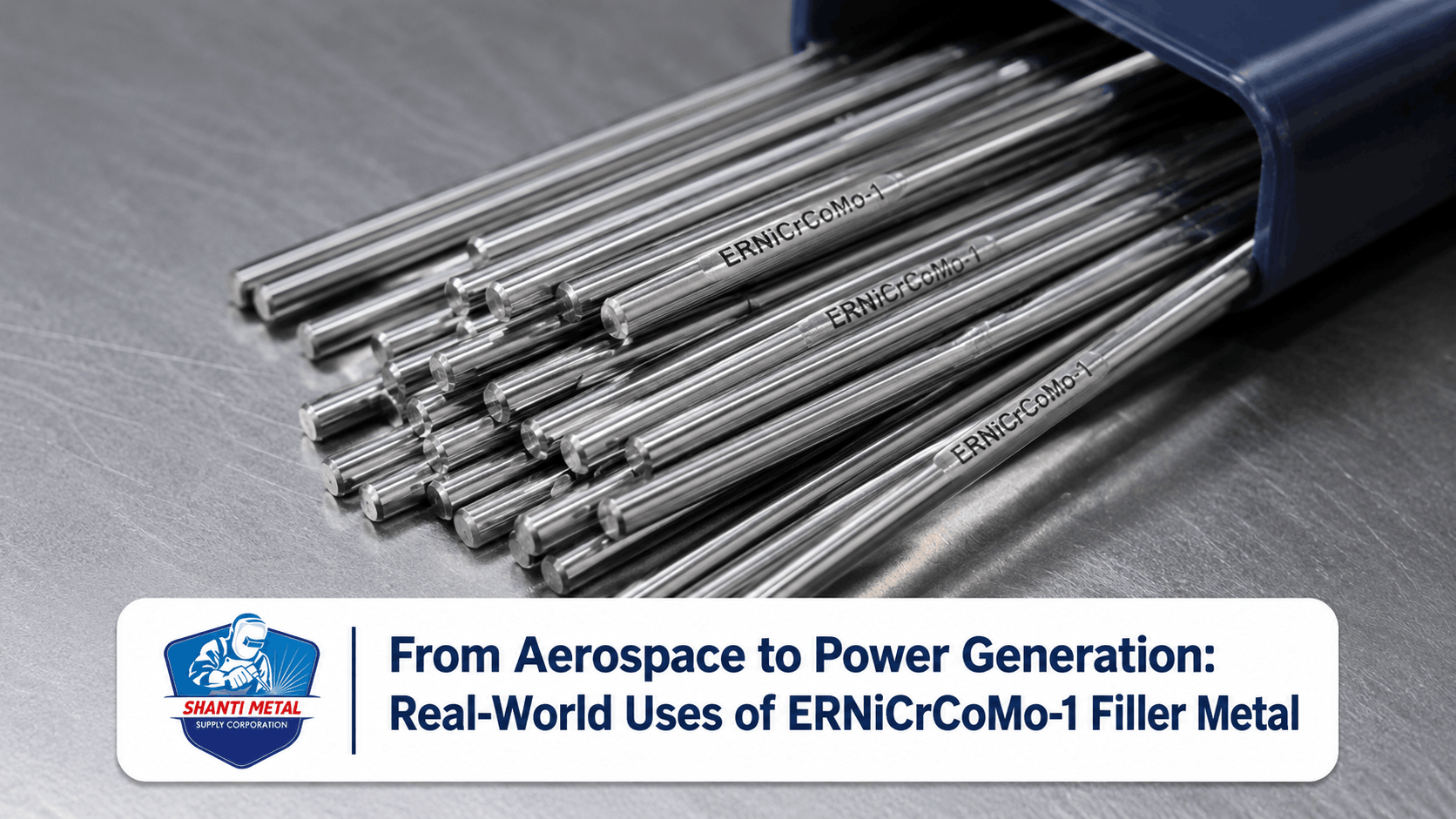
Filler metals determine whether a weld holds or fails. In applications where a failed weld means a grounded aircraft or a turbine offline, that choice carries enormous operational weight. ERNiCrCoMo-1 is at the top end of that decision. This nickel-chromium-cobalt-molybdenum filler metal handles the welding of advanced nickel-based superalloys in environments where standard materials cannot perform. Temperatures above 980°C, cyclic thermal loading, oxidising combustion atmospheres, high mechanical stress sustained over thousands of operating hours, and ernicrcomo-1 addresses all of these simultaneously. Its adoption spans aerospace, power generation, industrial gas turbines, and advanced manufacturing sectors where weld integrity is non-negotiable.
What Is ERNiCrCoMo-1 Filler Metal?
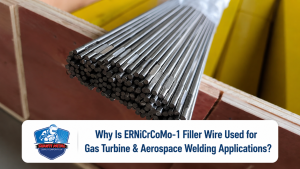
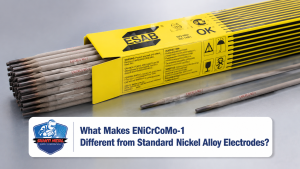
ERNiCrCoMo-1 is an AWS-classified nickel-based filler metal formulated for GTAW and GMAW of high-temperature superalloys, most notably Hastelloy X and similar nickel-chromium-iron-molybdenum alloys. The designation describes the chemistry directly: nickel as the base, chromium for oxidation resistance, cobalt for elevated-temperature strength, and molybdenum for solid-solution strengthening and corrosion resistance.
Chromium is between 20.5% and 23%, enabling stable Cr₂O₃ scale formation above 1000°C. Cobalt at 1.5% to 3% stabilises austenite and supports creep resistance. Molybdenum at 8% to 10% strengthens the deposit against pitting in sulphur-bearing environments. Key material characteristics include high-temperature tensile strength retained to approximately 980°C, resistance to oxidation in combustion gas streams, low susceptibility to thermal fatigue cracking, and structural stability over extended service without embrittlement.
Why ERNiCrCoMo-1 Is Used in Critical Industrial Welding Applications
Filler metal selection in high-performance systems directly affects service life. A weld deposit that loses strength at 700°C creates a failure point inside a system designed to run at 900°C. ERNiCrCoMo-1 eliminates that mismatch for nickel superalloy fabrication.
Resistance to elevated temperatures goes beyond a softening point. The deposit maintains yield strength and creep rupture properties at operating temperatures that cause carbon steels to become plastically unstable. Long-term mechanical stability comes from cobalt and molybdenum working together to resist dislocation movement at grain boundaries under sustained load. Compatibility with superalloys such as Hastelloy X, Alloy 617, and Alloy 230 avoids galvanic mismatch and heat-affected zone cracking that arise with mismatched filler chemistries. In cyclic thermal conditions, the relatively low coefficient of thermal expansion reduces fatigue stress accumulation at the weld toe.
Applications of ERNiCrCoMo-1 Filler Metal
Aerospace
Aerospace manufacturing demands weld joints that perform without degradation over tens of thousands of flight hours. Gas turbine engine components, including turbine blades, vanes, and transition ducts, see combustion gas temperatures above 1200°C on the hot-gas side. ERNiCrCoMo-1 deposits weld metal matching Hastelloy X base material properties closely enough to maintain joint efficiency above 90% at service temperature. Combustion chambers, exhaust systems, and high-temperature structural assemblies depend on their oxidation resistance at sustained load. Repair and overhaul operations at MRO facilities consume significant ERNiCrCoMo-1 volume, restoring cracked combustion liners and exhaust cones to original mechanical performance.
Power Generation Industry
Power plants running gas turbines face months of continuous high-temperature operation. Hot-section components including transition pieces, combustion liners, and first-stage nozzles face direct combustion gas impingement above 900°C. Heat recovery systems operating at 650°C to 800°C also benefit from resistance in sulphur-containing flue gases. Components subjected to daily thermal cycling accumulate fatigue damage at the weld joints first. ERNiCrCoMo-1 reduces crack initiation rates at those joints by maintaining ductility and fatigue strength through the full thermal cycle.
Industrial Gas Turbine Systems
Industrial gas turbines in oil and gas compression and pipeline operations run continuously under base load. Weld durability translates directly into maintenance intervals and uptime. Rotor and stator components machined from superalloy forgings require precision weld repairs that cannot introduce residual stresses. Turbine casings fabricated from Hastelloy X rely on ERNiCrCoMo-1 for circumferential seam welds that must maintain pressure integrity at 870°C for years. High-stress structures at flange joints carry combined mechanical and thermal loading that tests weld strength and toughness simultaneously.
Advanced Manufacturing and Engineering Sectors
Beyond turbines, demand extends into specialty fabrication where standard fillers hit a temperature ceiling. High-temperature processing equipment in petrochemical reforming units, hydrogen production furnaces, and thermal oxidisers operates at sustained temperatures between 800°C and 1100°C in chemically aggressive atmospheres. Critical maintenance and repair on long-running capital equipment depend on a filler that restores full structural performance rather than providing a temporary repair.
Key Factors That Make ERNiCrCoMo-1 Suitable for Demanding Applications
Resistance to Oxidation and Hot Corrosion
Chromium content between 20.5% and 23% drives protective oxide scale formation above 800°C, blocking oxygen and sulphur diffusion into the deposit. Oxidation rates drop to a fraction of what standard austenitic stainless weld metals experience in the same environment.
Creep Rupture Strength at Elevated Temperatures
Cobalt and molybdenum pin dislocations and grain boundaries against thermally activated movement. Creep rupture life at 980°C for ERNiCrCoMo-1 deposits closely tracks Hastelloy X base material data, making joint efficiency predictable over extended intervals.
Weld Metal Stability During Long Service Cycles
Unlike some high-alloy fillers that develop brittle intermetallic phases during thermal ageing, ERNiCrCoMo-1 deposits remain phase-stable to approximately 1000°C, preventing embrittlement-driven cracking at grain boundaries.
Reliability in Mission-Critical Components
Qualification histories include weld procedure qualifications completed to AWS D17.1 and ASME Section IX, providing documented performance data rather than assumptions.
Welding Considerations for ERNiCrCoMo-1 Filler Metal
Achieving the mechanical properties requires disciplined procedure control. Base material compatibility demands thorough cleaning before welding; nickel alloys tolerate virtually no sulphur or phosphorus contamination, as even trace levels cause hot cracking. Heat input control matters because nickel-based fillers have lower thermal conductivity than steel, concentrating heat in the weld zone. Interpass temperatures above 175°C increase cracking risk in precipitation-hardened base alloys. Weld integrity through service requires dye penetrant testing on the root pass and final surface, with radiographic or phased-array ultrasonic inspection on pressure-bearing welds before service return.
Selecting ERNiCrCoMo-1 for High-Performance Welding Projects
Match the filler to the operating condition rather than the base material designation alone. Below 700°C in non-oxidising environments, lower-cost nickel alternatives perform adequately. Above 800°C in combustion gas or oxidising atmospheres with cyclic loading, ERNiCrCoMo-1 becomes the technically justified choice. Aerospace projects must verify filler certifications against OEM approved materials lists. Power generation projects should confirm that procedure qualification records cover actual operating temperature and pressure. Projects combining new fabrication with in-service repair need to account for base metal microstructural changes from prior thermal exposure when setting interpass temperature controls.
Conclusion
ERNiCrCoMo-1 fills a specific, well-defined role: welding advanced nickel superalloys where temperature, stress, and chemical environment exceed what lower-alloy fillers sustain. Aerospace turbine hardware, power generation hot-section components, industrial gas turbine structures, and specialty high-temperature processing equipment all rely on this filler to maintain weld joint performance across years of demanding service. Chromium-driven oxidation resistance, cobalt and molybdenum strengthening, and phase stability through long thermal cycles combine to deliver base-material-level joint performance rather than a compromise. At Shanti Metal Supply Corporation, with 42 years of experience supplying high-performance nickel-based welding consumables, we stock ERNiCrCoMo-1 for project teams who need reliable material availability when critical welding is scheduled. Reach out to our technical team to confirm stock availability and material certifications for your next project.