Reducing acids destroy welds long before they touch the base metal. Sulfuric acid below 70% concentration, hydrochloric acid at almost any strength, and chloride-heavy streams attack weld metal at a rate that standard stainless fillers cannot survive. Plants running these chemistries do not get a second chance once a weld fails mid-shutdown.
Selecting the right nickel-molybdenum filler decides whether that weld lasts five years or fifteen. Engineers specifying consumables for acid plants, refineries, and offshore systems weigh alloy chemistry against the corrosive media in play, because a filler built for oxidizing service performs poorly in a reducing acid line.
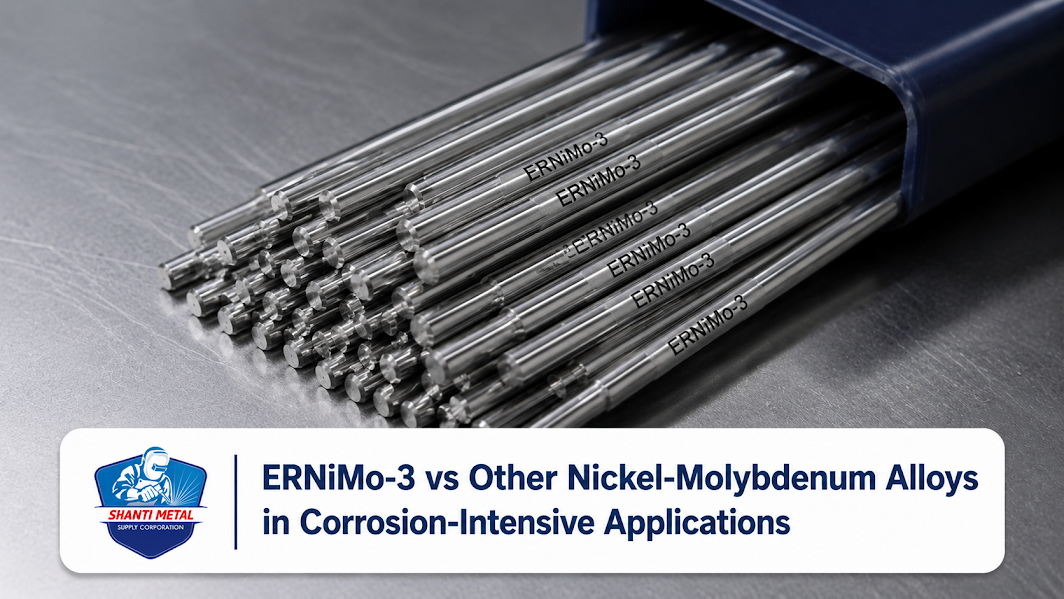
ERNiMo-3 sits at the center of this decision for non-oxidizing, reducing-acid environments. As an AWS A5.14 classified nickel-base filler, it joins alloys handling hydrochloric and sulfuric acid duty where chromium-rich fillers lose their edge. Shanti Metal Supply Corporation stocks ERNiMo-3 alongside other high-nickel welding consumables for fabricators who cannot afford to guess on alloy selection. While ERNiMo-3 is selected for highly reducing acid environments, fabricators may also evaluate AWS Class ENiCrFe-3 Coated Electrodes for applications involving dissimilar metal welding and broader corrosion-resistant fabrication requirements.
Understanding ERNiMo-3 and Nickel-Molybdenum Alloys
Chromium makes stainless steel resist oxidizing acids, but it actively weakens performance in reducing acid service. Molybdenum takes over that protective role instead, and alloys built around a high nickel-molybdenum ratio with minimal chromium hold up where 316L breaks down.
Selection within this family comes down to three properties: resistance to general corrosion in reducing acids, resistance to localized chloride attack, and stability across the heat-affected zone after welding. Fabricators specify these consumables for pickling equipment, acid recovery units, and reactors running hydrochloric, sulfuric, or acetic acid.
What Is ERNiMo-3?
ERNiMo-3 carries nickel content above 65%, molybdenum between 28% and 30%, and chromium held under 1.5%, a composition matching Hastelloy B-3 base metal chemistry. Iron stays below 2%, keeping the weld metal close to the base alloy’s corrosion profile.
This filler welds Hastelloy B-3, B-2, and B series base metals used in hydrochloric acid up to 37% concentration at elevated temperature, sulfuric acid in reducing conditions, and acetic or formic acid service. With almost no chromium present, it avoids the intergranular corrosion that chromium-carbide precipitation causes in chromium-bearing alloys after welding. Although ERNiMo-3 is optimized for nickel-molybdenum alloys in reducing media, AWS Class ENiCrFe-3 Coated Electrodes remain a preferred option for many high-temperature and corrosion-resistant welding applications involving nickel-chromium-iron alloys.
What Are Other Common Nickel-Molybdenum Alloys?
ERNiCrMo-3 (Inconel 625 chemistry) adds 20-23% chromium to a nickel-molybdenum-niobium base, shifting its strength toward oxidizing and mixed-acid environments rather than pure reducing acids. ERNiCrMo-4 (Hastelloy C-276 filler) pushes chromium to roughly 15% and adds tungsten, giving it broader resistance across oxidizing and reducing media at a higher cost per kilogram.
ERNiMo-7, a newer B-3 type variant, refines the same low-chromium chemistry with tighter iron and silicon control for improved weldability. Each alternative trades reducing-acid performance for broader chemical versatility, which matters on lines carrying mixed or fluctuating process chemistry.
Key Corrosion Resistance Properties of ERNiMo-3
-
Resistance to Reducing Acids
ERNiMo-3 weld deposits withstand hydrochloric acid at concentrations up to 37% and temperatures exceeding 65°C, conditions that would perforate a 316L weld within weeks. In sulfuric acid below 70% concentration, the alloy maintains corrosion rates low enough for continuous service rather than periodic replacement.
Localized attack stays minimal here because the chemistry avoids the chromium-depleted zones that drive pitting in chromium-bearing welds.
-
Resistance to Pitting and Crevice Corrosion
Chloride concentration above 200 ppm pits most stainless welds within a single operating season. ERNiMo-3’s molybdenum-driven passivity holds up under chloride loads that would force a shutdown on a lesser alloy, particularly in crevices formed at flange faces and gasket seats.
Crevice failures occur at joints and welds first, so this localized resistance matters more than bulk corrosion resistance for equipment running continuous hydrochloric acid duty over 10 years or more.
-
Stress Corrosion Cracking Resistance
High-stress components in acid recovery vessels and reactor internals need weld metal that resists cracking under combined mechanical load and chemical attack. ERNiMo-3’s low chromium content removes the sensitization risk that drives stress corrosion cracking in chromium-rich alloys exposed to chloride and polythionic acid, translating into real safety margin for vessels operating near design pressure.
ERNiMo-3 vs Other Nickel-Molybdenum Alloys: Key Differences
Chemical Composition Comparison
The defining gap between ERNiMo-3 and chromium-bearing alternatives like ERNiCrMo-3 and ERNiCrMo-4 is chromium content: under 1.5% versus 15-23%. Chromium helps in oxidizing acids and works against the alloy in strongly reducing ones, so this single number dictates which acid families each filler handles best.
Corrosion Resistance Performance
In pure hydrochloric or sulfuric acid service, ERNiMo-3 outperforms chromium-bearing fillers on uniform corrosion rate. In mixed oxidizing-reducing environments, such as nitric-hydrofluoric pickling baths, ERNiCrMo-4 holds the advantage because its chromium and tungsten content covers both attack modes.
High-Temperature Stability
ERNiMo-3 retains corrosion resistance up to roughly 425°C in reducing acid service without significant carbide precipitation, since little chromium is available to form damaging carbides. ERNiCrMo alloys need post-weld heat treatment consideration above similar temperatures to manage chromium carbide formation at grain boundaries.
Weldability and Fabrication Characteristics
ERNiMo-3 welds with standard GTAW and GMAW procedures and shows low susceptibility to hot cracking, a known risk in high-nickel fillers. It joins to B-3 and B-2 base metals without the heat input control that chromium-rich superalloys often demand.
Service Life in Corrosion-Intensive Applications
Acid plants running ERNiMo-3 welded equipment in hydrochloric acid duty report service intervals extending past a decade before weld inspection flags measurable degradation. Chromium-bearing alternatives in the same reducing-acid service typically show earlier signs of attack at weld zones, shortening the gap between inspections.
Performance of ERNiMo-3 in Corrosion-Intensive Industries
-
Chemical Processing Plants
Acid concentration units and pickling lines rely on ERNiMo-3 welds to hold corrosion rates within design tolerance across years of continuous operation.
-
Petrochemical and Refinery Applications
Hydroprocessing units use ERNiMo-3 to join Hastelloy B-3 piping, maintaining weld integrity where standard stainless welds degrade within a single turnaround cycle.
-
Marine and Offshore Systems
Seawater systems exposed to high chloride concentration benefit from the same pitting resistance that protects acid plant equipment, since the attack mechanism overlaps across both settings.
-
Pollution Control and Waste Treatment Facilities
Flue gas desulfurization units expose welds to fluctuating pH and chloride content together. ERNiMo-3 holds corrosion resistance steady across that variability better than alloys built for one acid type.
Factors to Consider When Comparing ERNiMo-3 with Alternative Alloys
-
Type of Corrosive Media
Match the filler to actual process chemistry, not a general corrosion category. Pure reducing acid service favors ERNiMo-3; mixed oxidizing-reducing streams favor ERNiCrMo-4.
-
Operating Temperature Requirements
Confirm the maximum sustained temperature in the line. Corrosion behavior shifts sharply above 65°C in hydrochloric service and above 425°C for long-term thermal stability.
-
Welding and Fabrication Demands
Check joint design and whether the fabrication shop has established procedures for low-chromium nickel alloys before committing to ERNiMo-3 over a more common filler.
-
Lifecycle Performance and Maintenance Expectations
Weigh material cost against inspection intervals. A filler costing 15-20% more upfront often costs less over a decade if it pushes inspection cycles from annual to triennial.
When ERNiMo-3 Is the Preferred Choice
ERNiMo-3 earns its place when the process stream runs predominantly reducing acid chemistry, hydrochloric acid above 20% concentration, or sulfuric acid below 70%, without significant oxidizing contamination. Vessels and piping carrying these chemistries at elevated temperature, where weld integrity determines containment safety, gain the most from this low-chromium design.
Limitations and Selection Considerations
ERNiMo-3 underperforms in oxidizing or mixed-acid environments where chromium content would help rather than hurt, making it the wrong choice for nitric acid or oxidizing chloride duty. Every selection decision needs a compatibility check against the exact base metal, process chemistry, and temperature profile of the system.
Conclusion
ERNiMo-3 and its chromium-bearing alternatives split the nickel-molybdenum market along one clear line: reducing acid performance versus broader oxidizing-reducing versatility. Corrosion resistance, weldability, and service life all depend on matching that line to the actual process conditions a weld will face.
Shanti Metal Supply Corporation stocks ERNiMo-3 and related high-nickel welding consumables for fabricators working across acid processing, refining, and offshore service. Contact our technical team to confirm grade compatibility before specifying a filler.