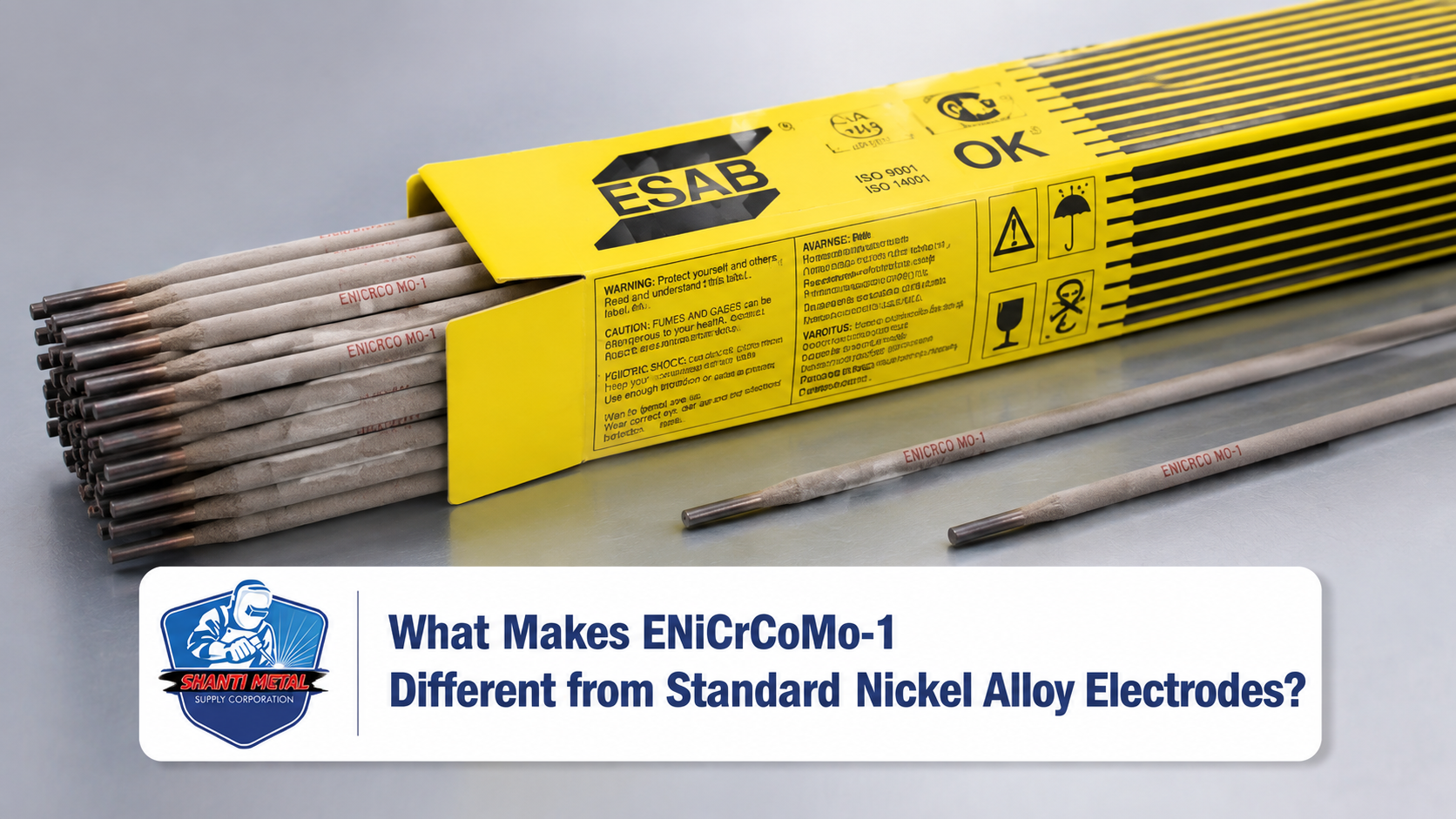
Nickel alloy welding electrodes hold together some of the toughest joints in industry, from gas turbine casings to chemical reactor vessels. The wrong grade risks premature weld failure, corrosion attack, or loss of strength at elevated temperature. ENiCrCoMo-1 is engineered for extreme service conditions. This guide compares it against standard nickel alloy electrodes to help fabricators choose the right consumable.
What Is ENiCrCoMo-1?
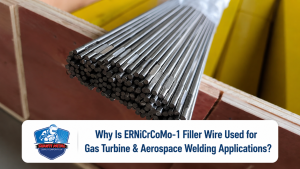
ENiCrCoMo-1 is a nickel-chromium-cobalt-molybdenum electrode built for joints that must survive sustained heat and mechanical load together. Cobalt raises high-temperature strength, molybdenum resists pitting and crevice corrosion, and chromium forms a stable oxide layer against scaling. Fabricators specify it for gas turbine hardware and jet engine components, categories covered under high-nickel alloy welding consumables.
Key Characteristics of ENiCrCoMo-1
Four properties separate this electrode from general-purpose nickel fillers, each addressing a specific failure mode in high-stress service.
- ENiCrCoMo-1 retains tensile strength at temperatures above 980°C without significant softening.
- The weld deposit resists oxidation and corrosion in both oxidizing and reducing furnace atmospheres.
- Creep resistance keeps weld joints stable under constant load during thousands of thermal cycles.
- Skilled welders achieve sound, crack-free deposits even on thick-section, restraint-heavy joints.
What Are Standard Nickel Alloy Electrodes?
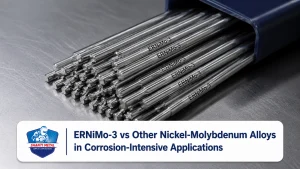
Standard nickel alloy electrodes, including ENiCrFe-3 and ENiCrMo-3, cover general corrosion resistance and moderate heat service across chemical processing and power piping. These grades handle temperatures up to roughly 600°C and resist common acids, alkalis, and chloride environments. Fabricators rely on nickel alloy electrode grades for routine pressure vessel and pipeline welding where extreme creep or oxidation resistance is not the priority. Shanti Metal Supply Corporation stocks both standard and specialized nickel alloy welding consumables.
ENiCrCoMo-1 vs Standard Nickel Alloy Electrodes: Key Differences
Five factors separate these two electrode categories, from raw chemistry through final weld performance in service.
Chemical Composition
ENiCrCoMo-1 carries higher cobalt and molybdenum content than standard grades. Chromium stabilizes the oxide layer, while cobalt and molybdenum jointly raise strength retention above 900°C.
High-Temperature Performance
Standard electrodes lose measurable strength above 600°C. ENiCrCoMo-1 sustains load-bearing capacity past 980°C, resisting creep deformation and thermal fatigue during repeated heating cycles.
Corrosion and Oxidation Resistance
Standard grades resist wet corrosion in chemical service well. ENiCrCoMo-1 additionally withstands dry oxidation and cyclic exposure to oxidizing and reducing furnace atmospheres common in turbines.
Mechanical Properties
ENiCrCoMo-1 delivers higher tensile strength, greater toughness at elevated temperature and long-term structural stability. Standard electrodes meet room-temperature demands but degrade faster under sustained stress.
Weldability and Weld Metal Integrity
Both electrode types produce stable arcs, but ENiCrCoMo-1 resists strain-age cracking better in thick, restrained joints, reducing defect rates on complex fabrications.
Where ENiCrCoMo-1 Offers a Performance Advantage
Certain industries depend on weld joints that must perform reliably under sustained heat, pressure and corrosive attack simultaneously.
Gas Turbine Components
Turbine casings and combustion liners are exposed to extreme heat repeatedly. ENiCrCoMo-1 deposits can withstand thousands of start-stop cycles without loss of strength or cracking.
Aerospace and Aviation Equipment
Engine housings and exhaust structures demand weld metal that tolerates vibration alongside heat. ENiCrCoMo-1 provides the toughness and creep resistance flight-critical hardware requires.
Petrochemical Processing Plants
Reactor vessels and furnace tubing face oxidizing gases and corrosive feedstocks daily. ENiCrCoMo-1 resists scaling and pitting where standard electrodes degrade faster.
Power Generation Systems
Boiler components and superheater tubing are exposed to continuous thermal cycling near the limits of the materials. ENiCrCoMo-1 maintains structural integrity at locations where conventional nickel electrodes exhibit measurable creep.
High-Temperature Industrial Equipment
Furnace fixtures, heat treatment baskets and kiln hardware endure repeated thermal shock. ENiCrCoMo-1 welds hold dimensional stability better than standard-grade repairs in these settings.
When Should You Choose ENiCrCoMo-1 Instead of Standard Nickel Alloy Electrodes?
Choose ENiCrCoMo-1 whenever a joint must operate continuously above 800°C, since standard electrodes soften and lose creep resistance well before that threshold. The same applies to aggressive process environments combining oxidizing gases with cyclic heat, where standard filler metals oxidize faster than the base material.
Critical repair and maintenance welds on turbine or reactor components also call for this grade, particularly when downtime costs outweigh the premium. Components expected to remain in service for decades justify the added creep and oxidation resistance this electrode provides.
Factors to Consider Before Selecting ENiCrCoMo-1
Base metal compatibility is the deciding factor in whether this electrode will join properly without dilution at the joint interface. Whether the premium performance is worth the additional cost depends on the operating temperature requirements, service environment corrosivity, and required mechanical properties. This grade shall not be specified unless approved for the intended application by applicable welding procedures and industry norms such ASME and AWS.
Conclusion
ENiCrCoMo-1 distinguishes itself through superior high-temperature strength, creep resistance and oxidation performance compared to standard nickel alloy electrodes. Applications demanding long-term structural reliability under extreme heat and corrosive exposure benefit most from this grade. Evaluate operating temperature, corrosion exposure and mechanical demands carefully before finalizing an electrode selection.